
Product Owner (2024-2026)
What if you could just talk to your user?
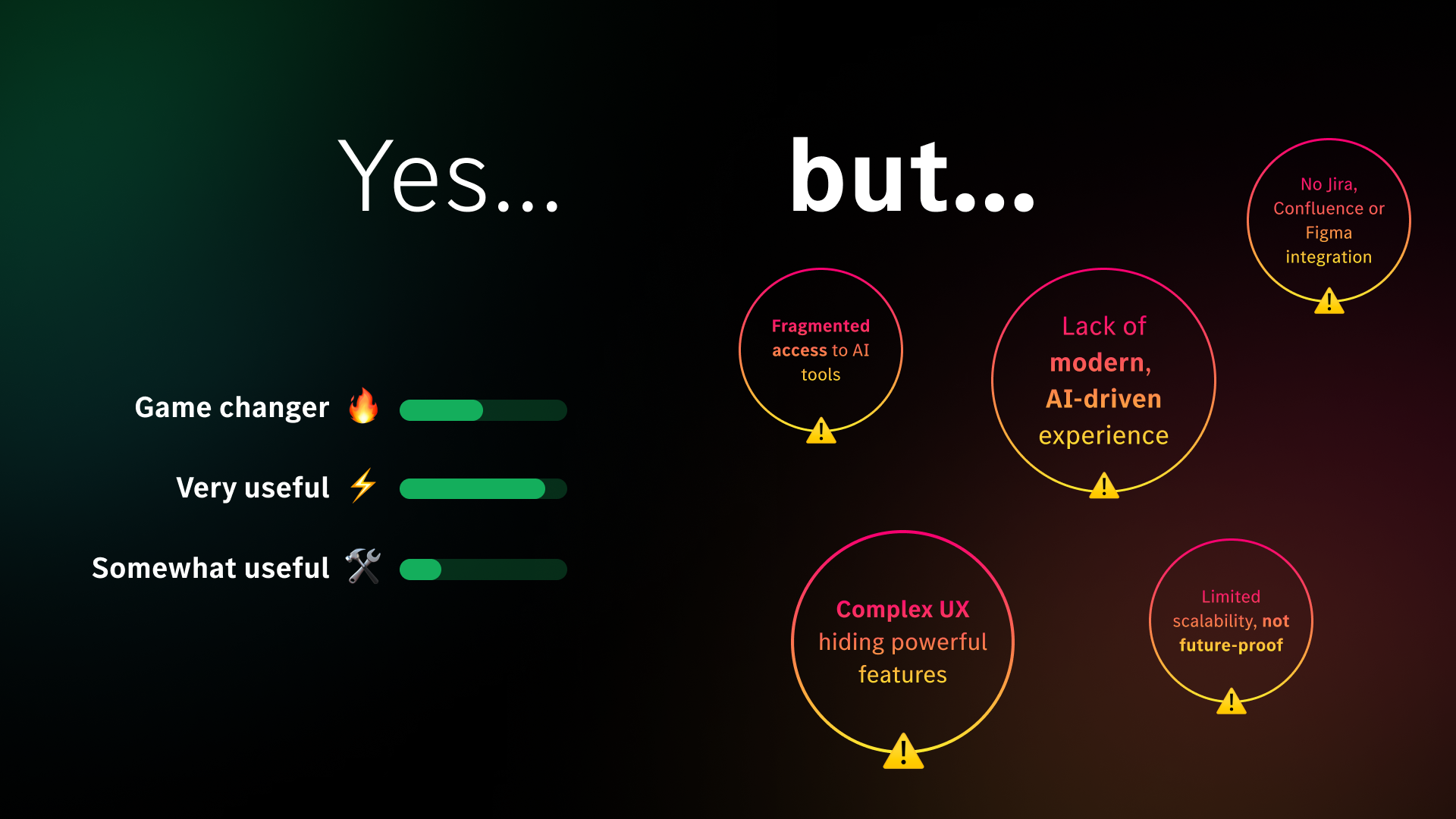
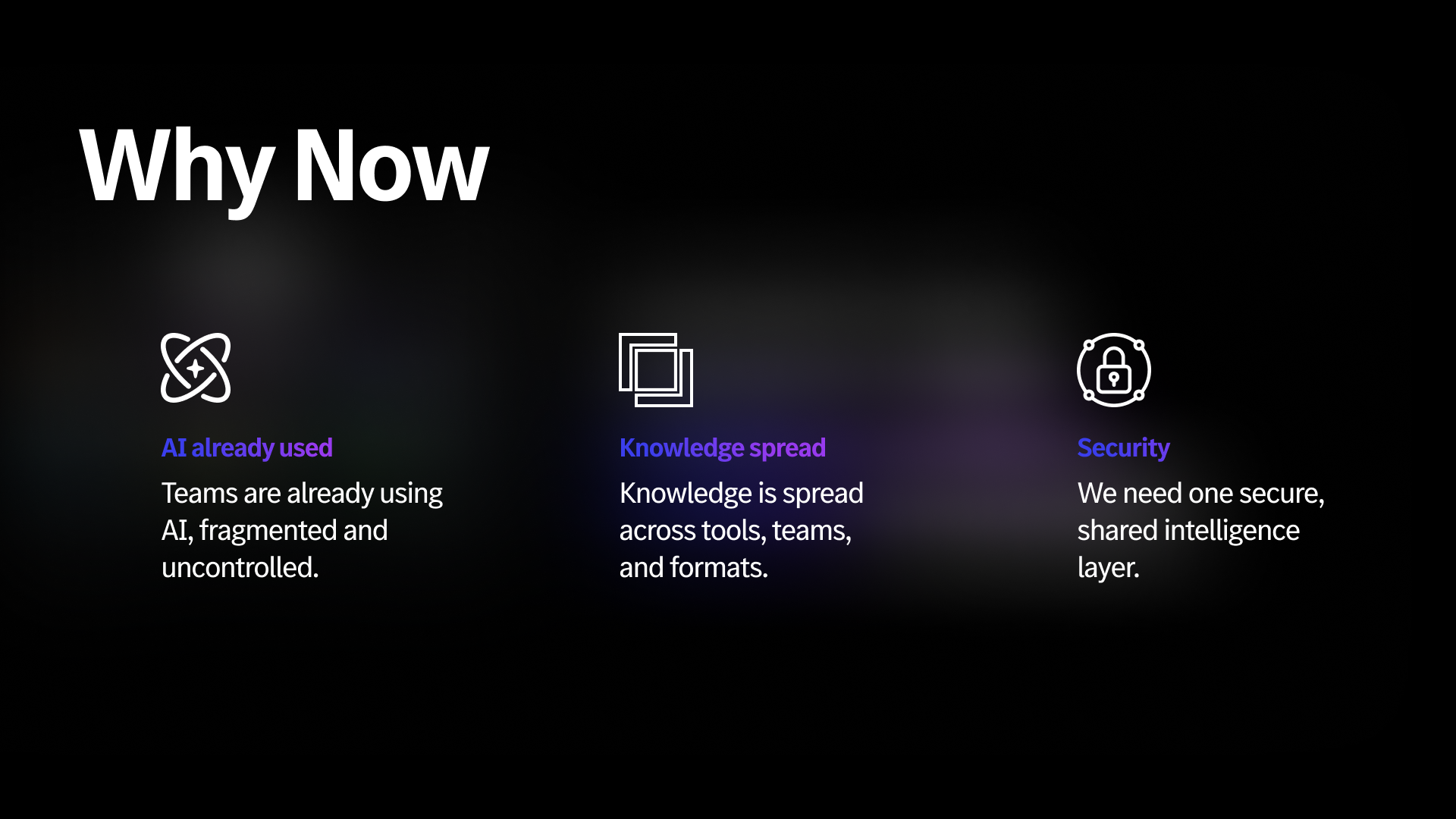
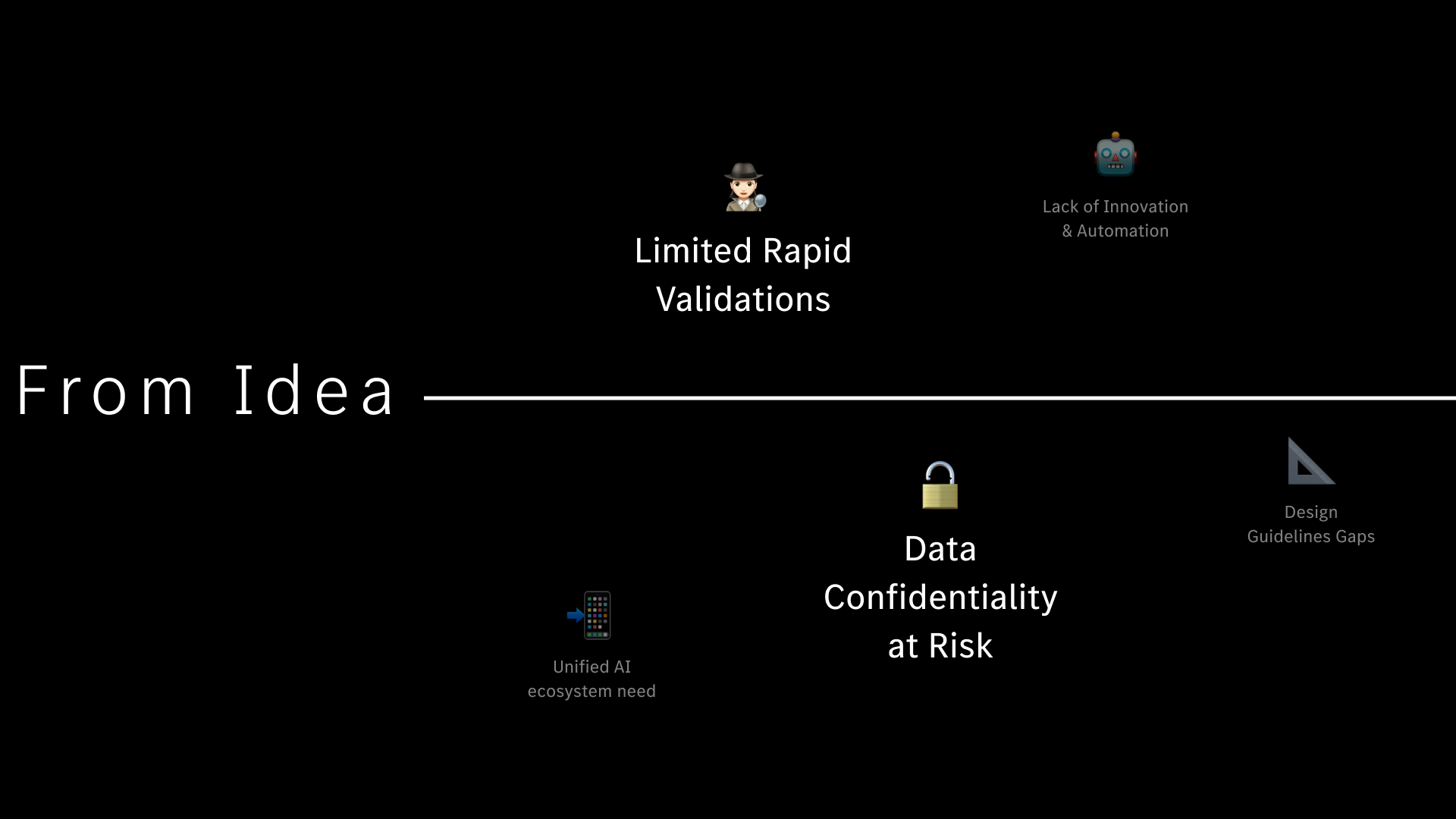
Product and design teams at MBition were making decisions in the dark. Research was slow and expensive. Personas lived in documents nobody opened. Validation happened late — or not at all. Teams disagreed on who they were building for because there was no shared, living reference.
I saw the gap and framed a concept: what if teams could have a direct conversation with an expert or a customer persona to unlock decisions instantly? Not a static document. A conversation. Agentic, contextual, grounded in real data.
Due to confidentiality and security policies, I cannot publicly display specific designs and visuals from this project. However, upon request, I'm happy to discuss my role, processes, and contributions in detail.
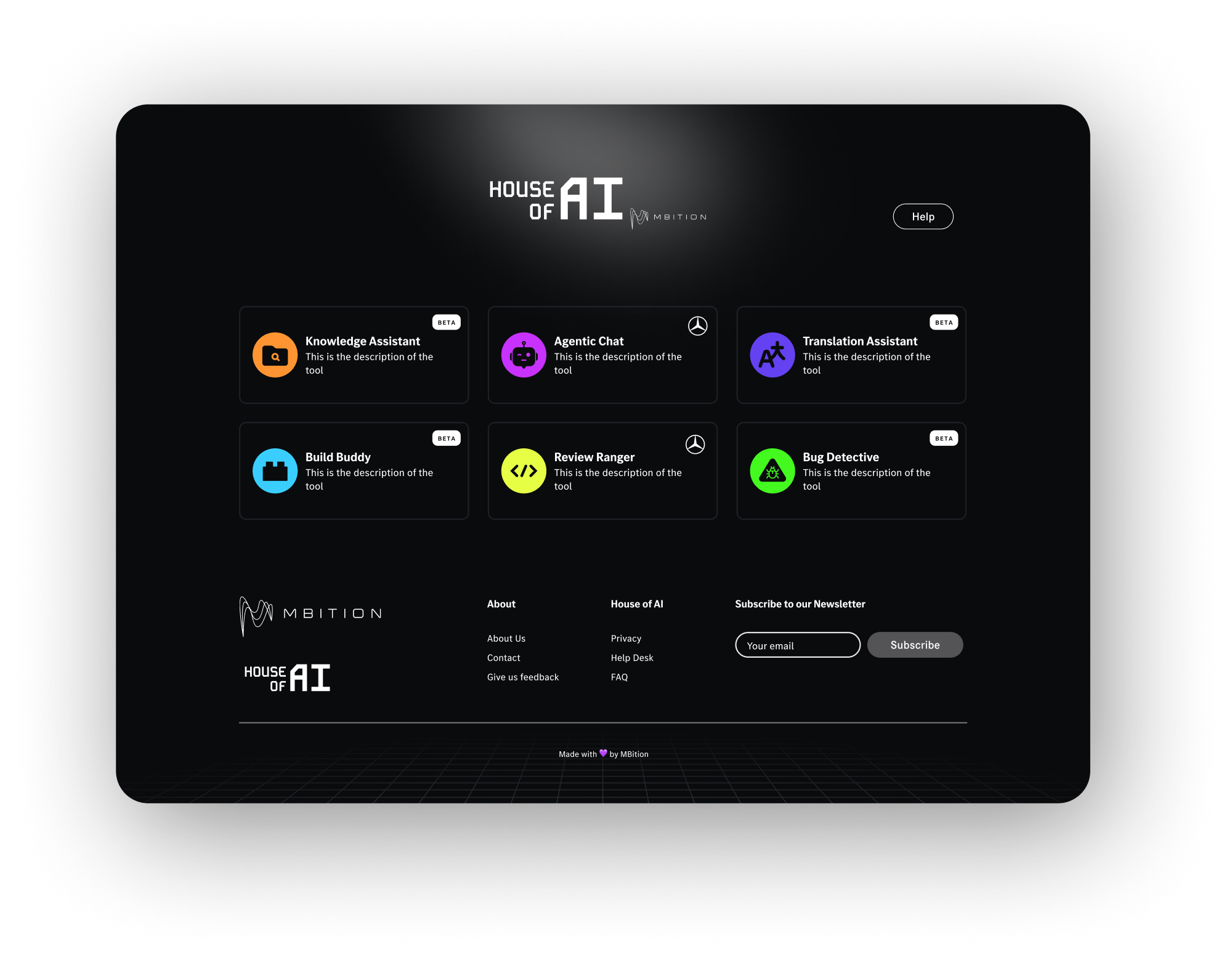
Chat with the user you're designing for. Chat with the expert you need. Get a decision-quality answer in minutes.
That idea became Agentic Chat. And Agentic Chat became the first room in a larger vision I designed: a unified AI platform for the entire organization — the House of AI.
Three levels of ownership.
One continuous product bet.
House of AI
Platform Design | Concept & Architecture
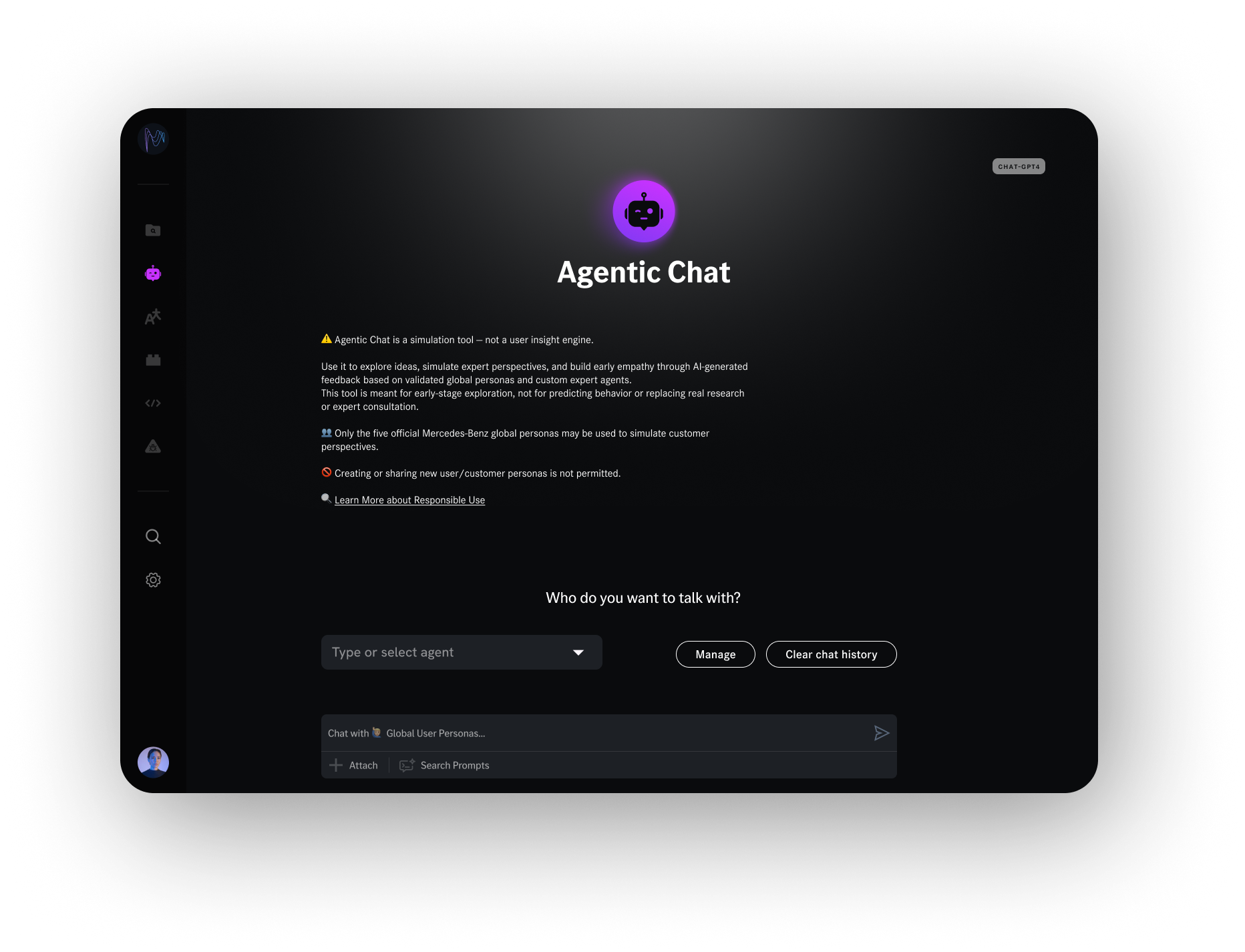
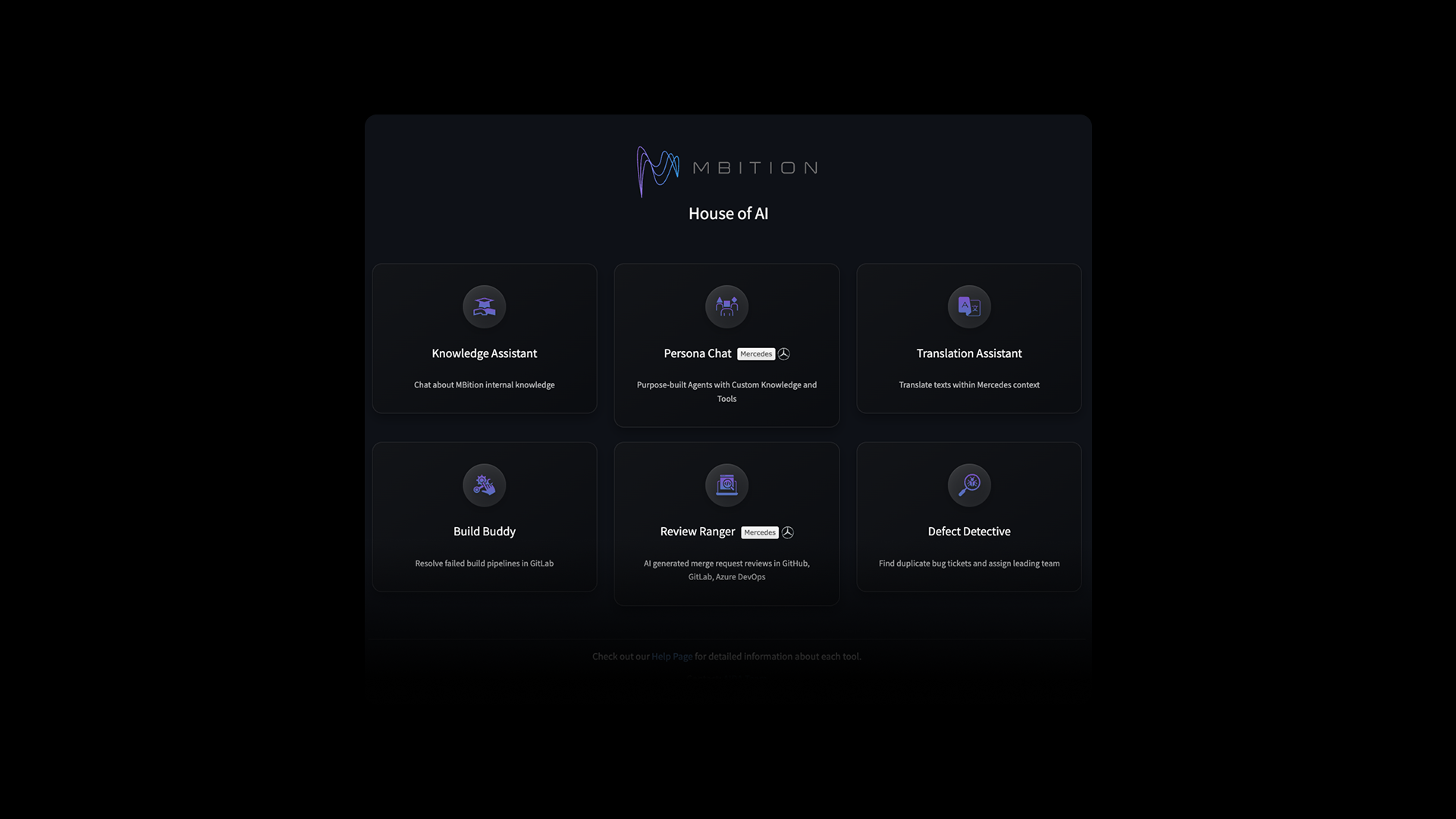
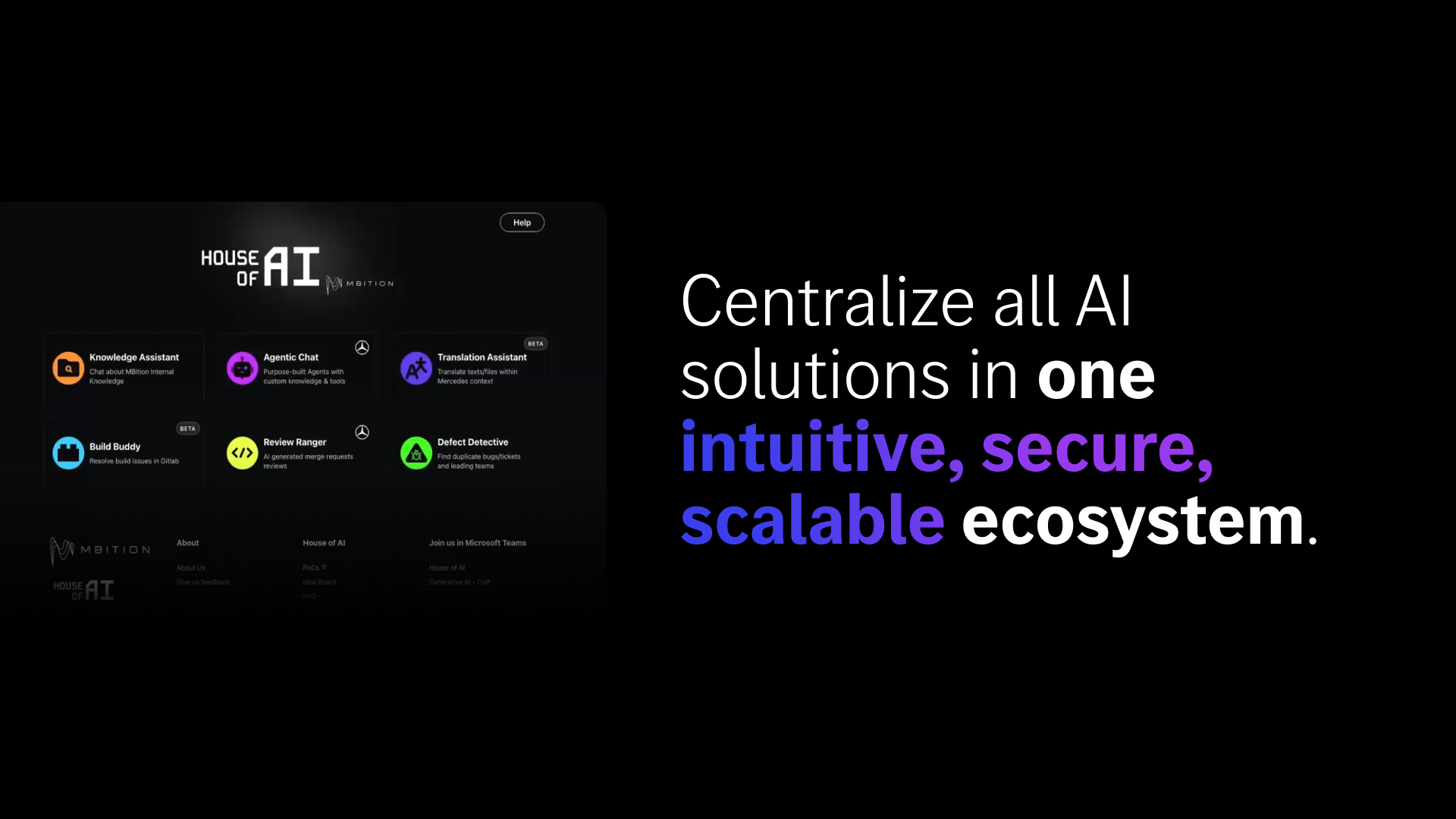
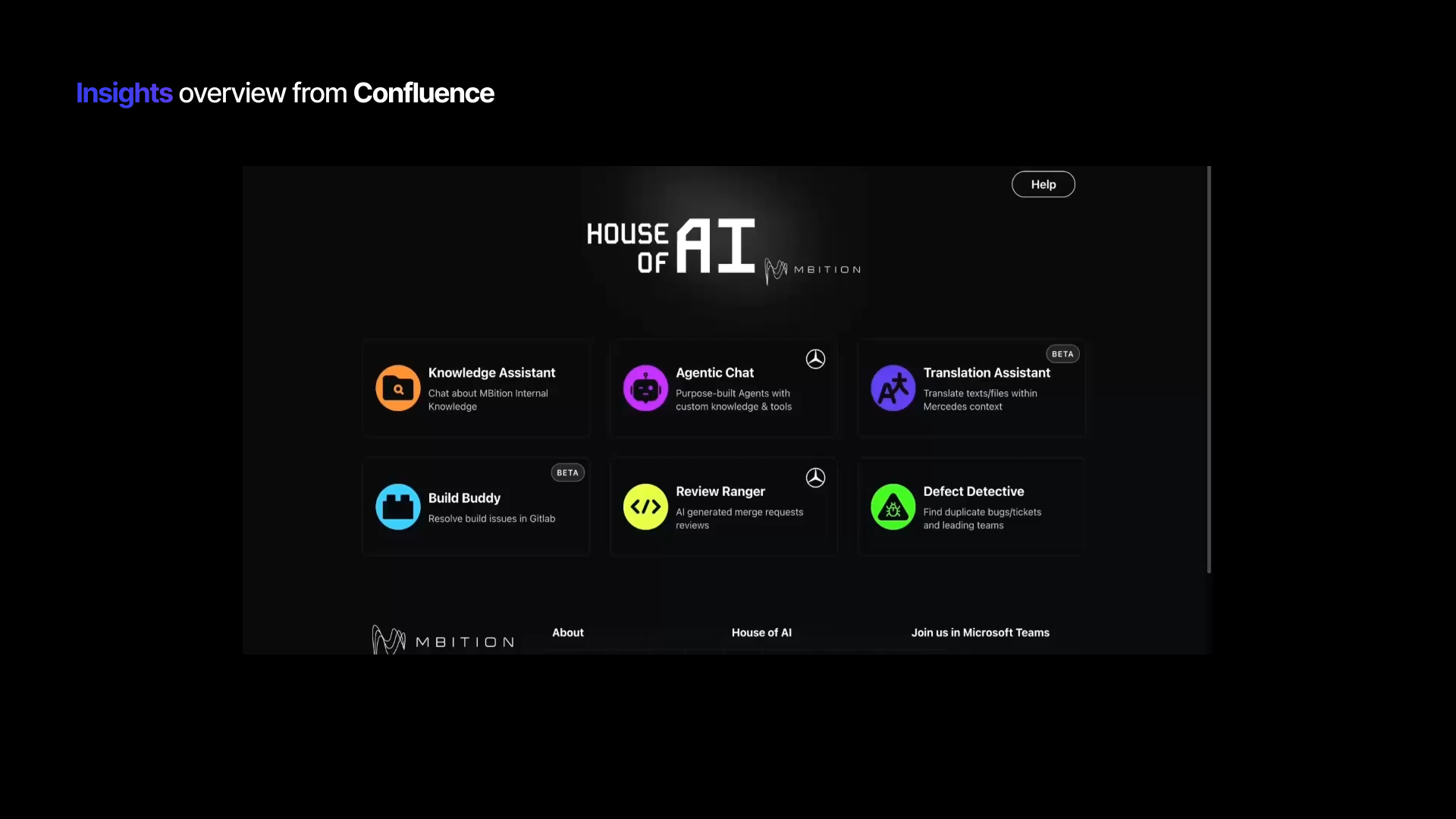
I conceived and designed the platform architecture — a unified, secure AI ecosystem where product, design, and engineering teams could access different types of AI intelligence through one interface. Six distinct AI "rooms," each purpose-built for a specific type of work. I designed the product metaphor, the information architecture, and the experience. Data Science and Engineering built it.
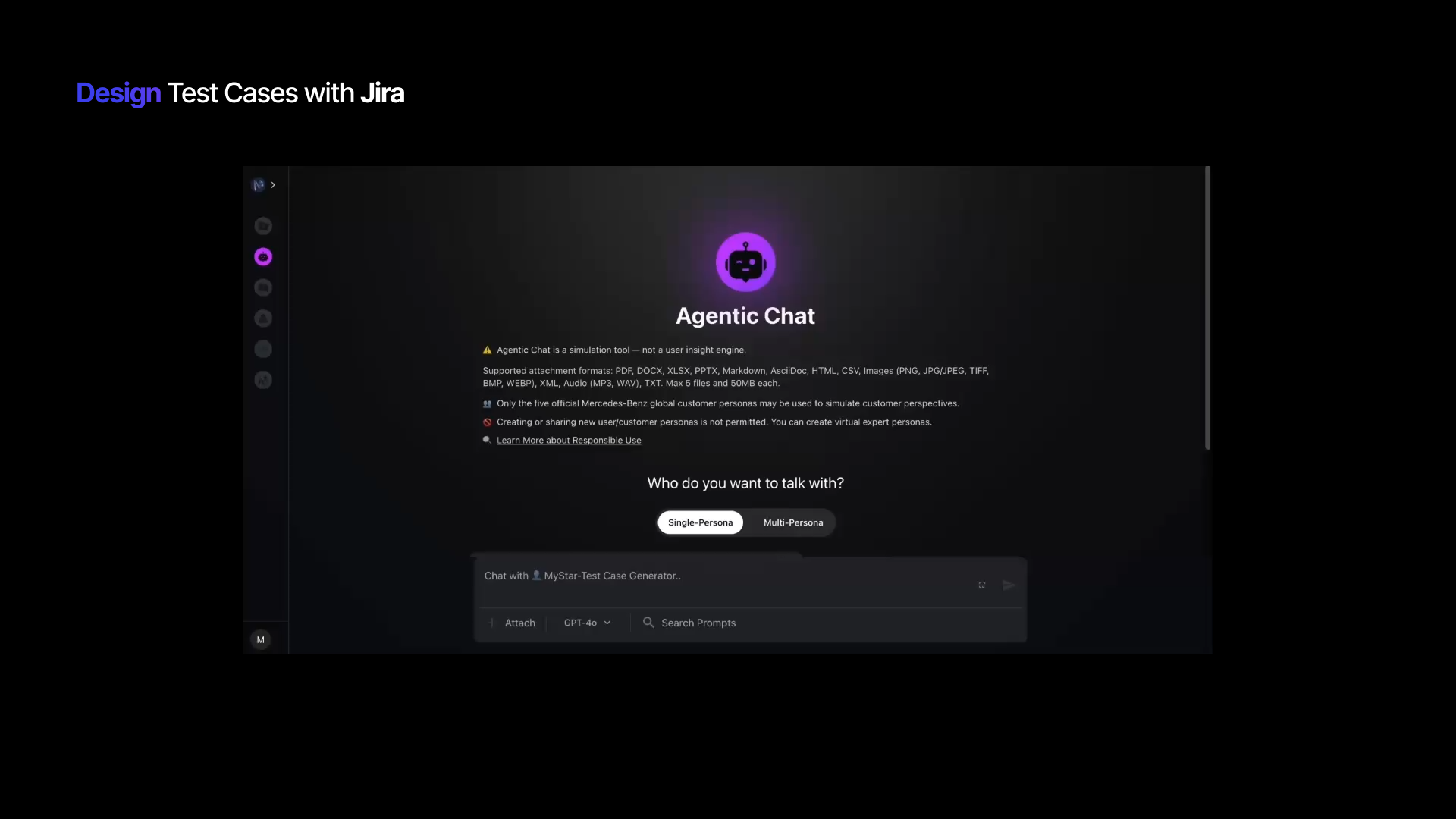
Agentic Chat
Product Ownership | Co-Creator & PO
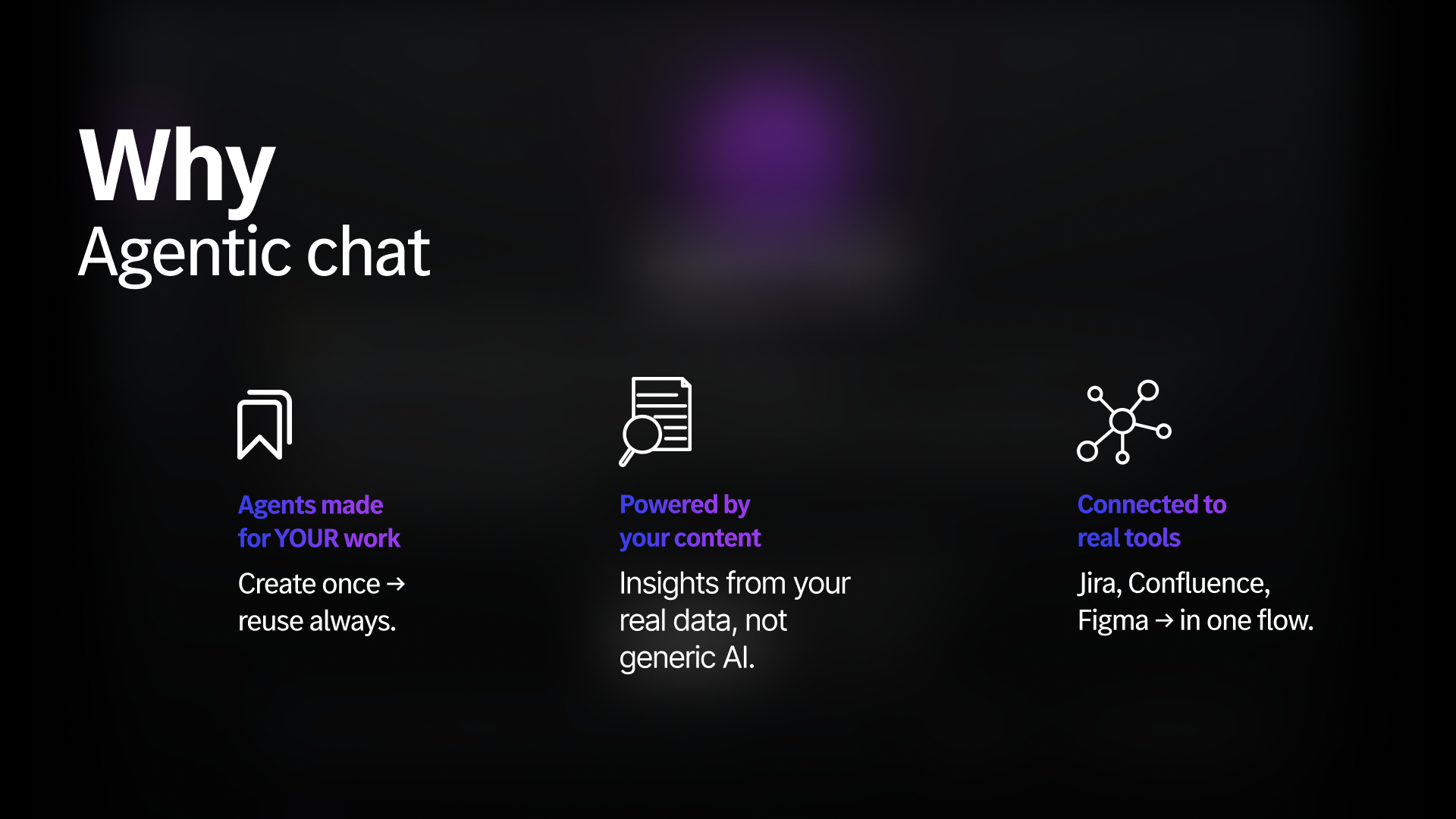
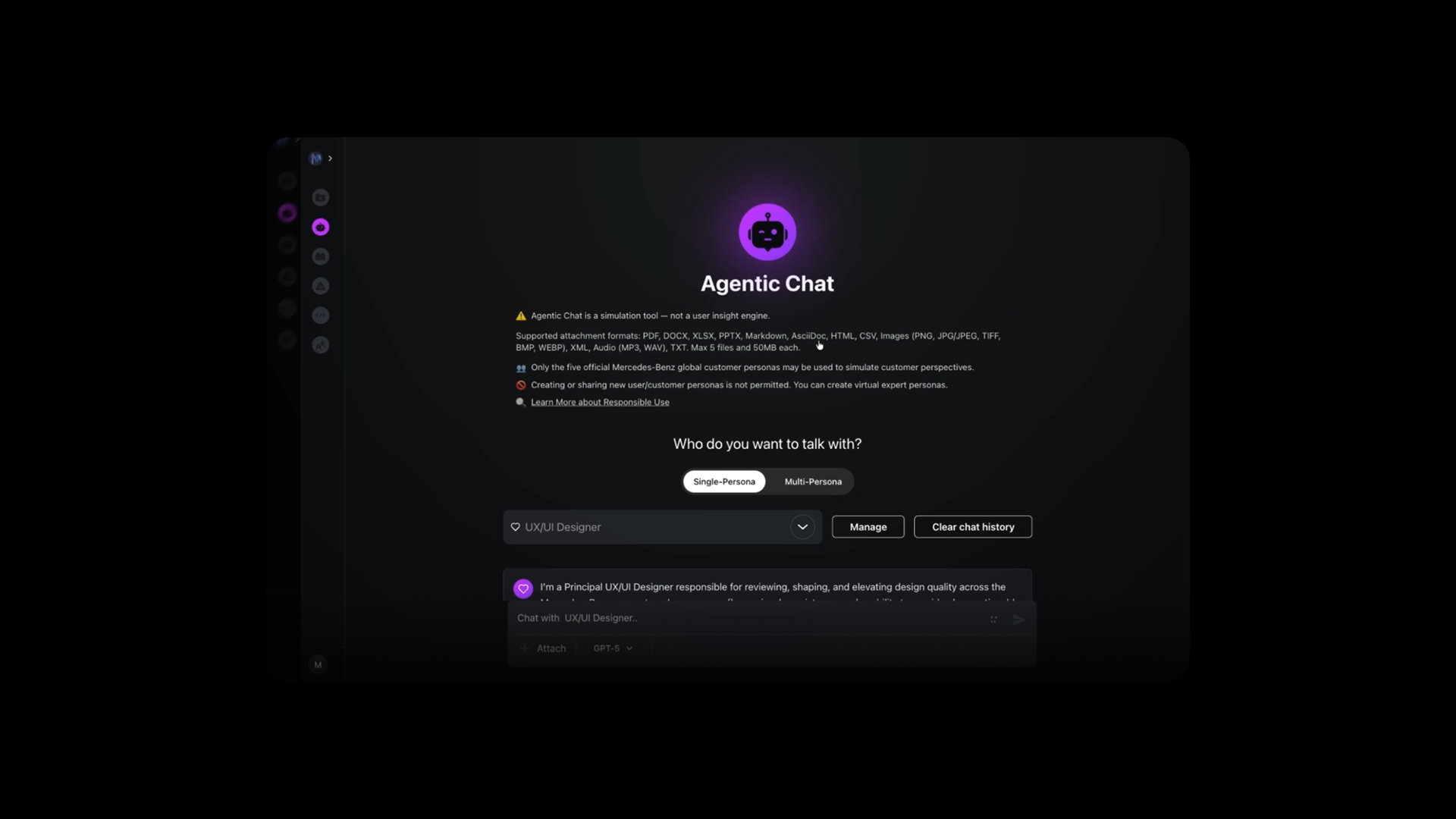
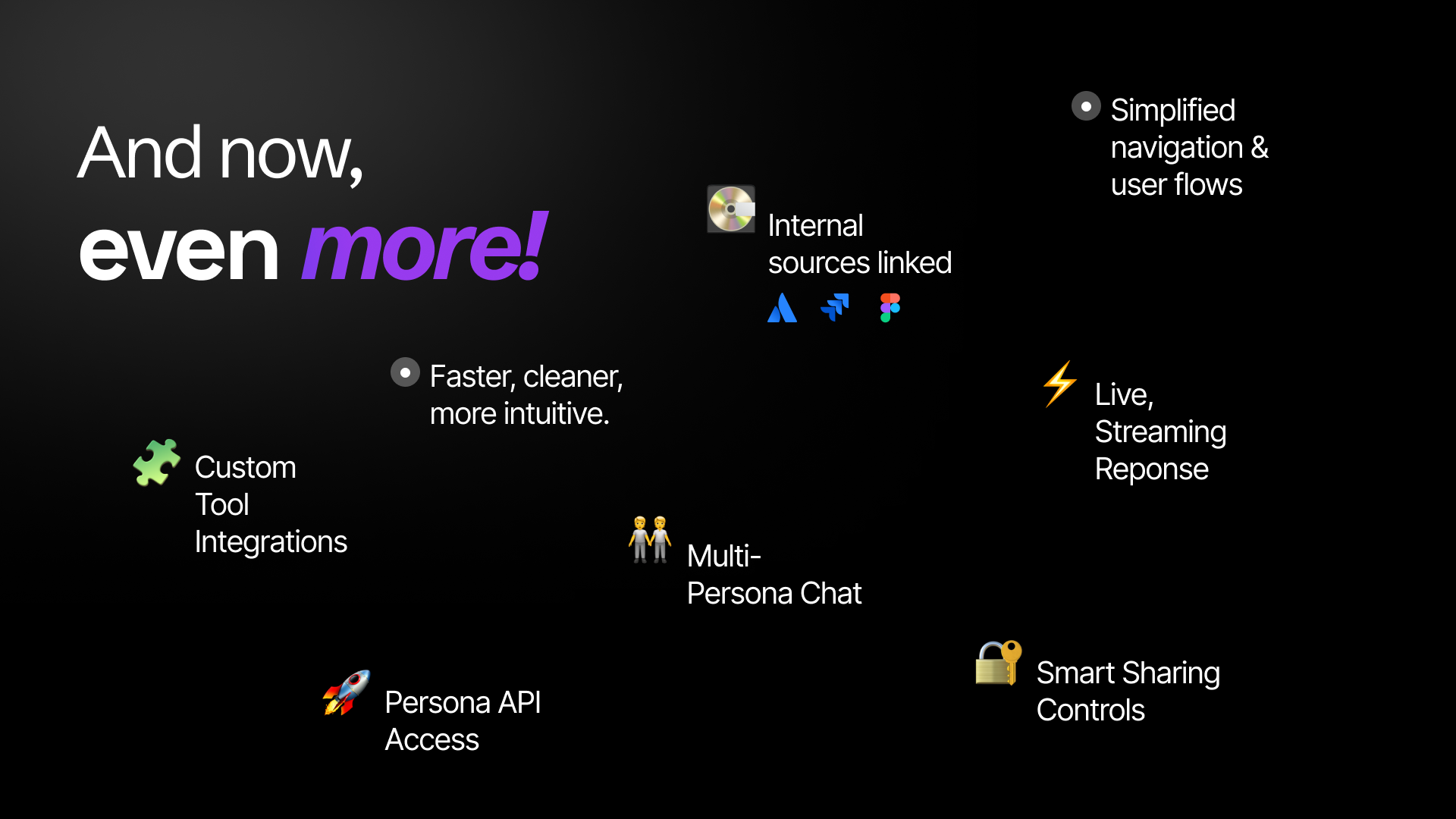
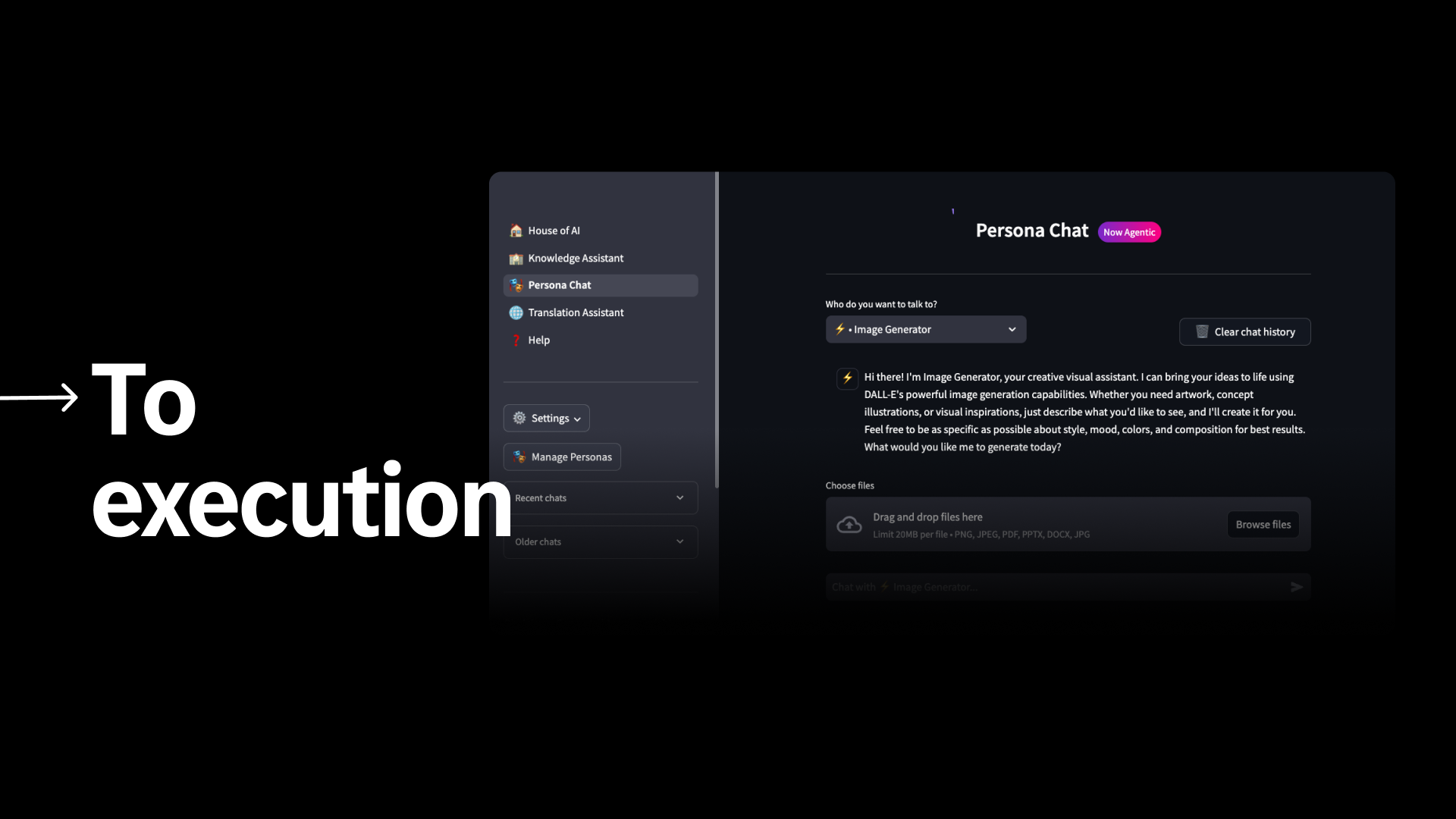
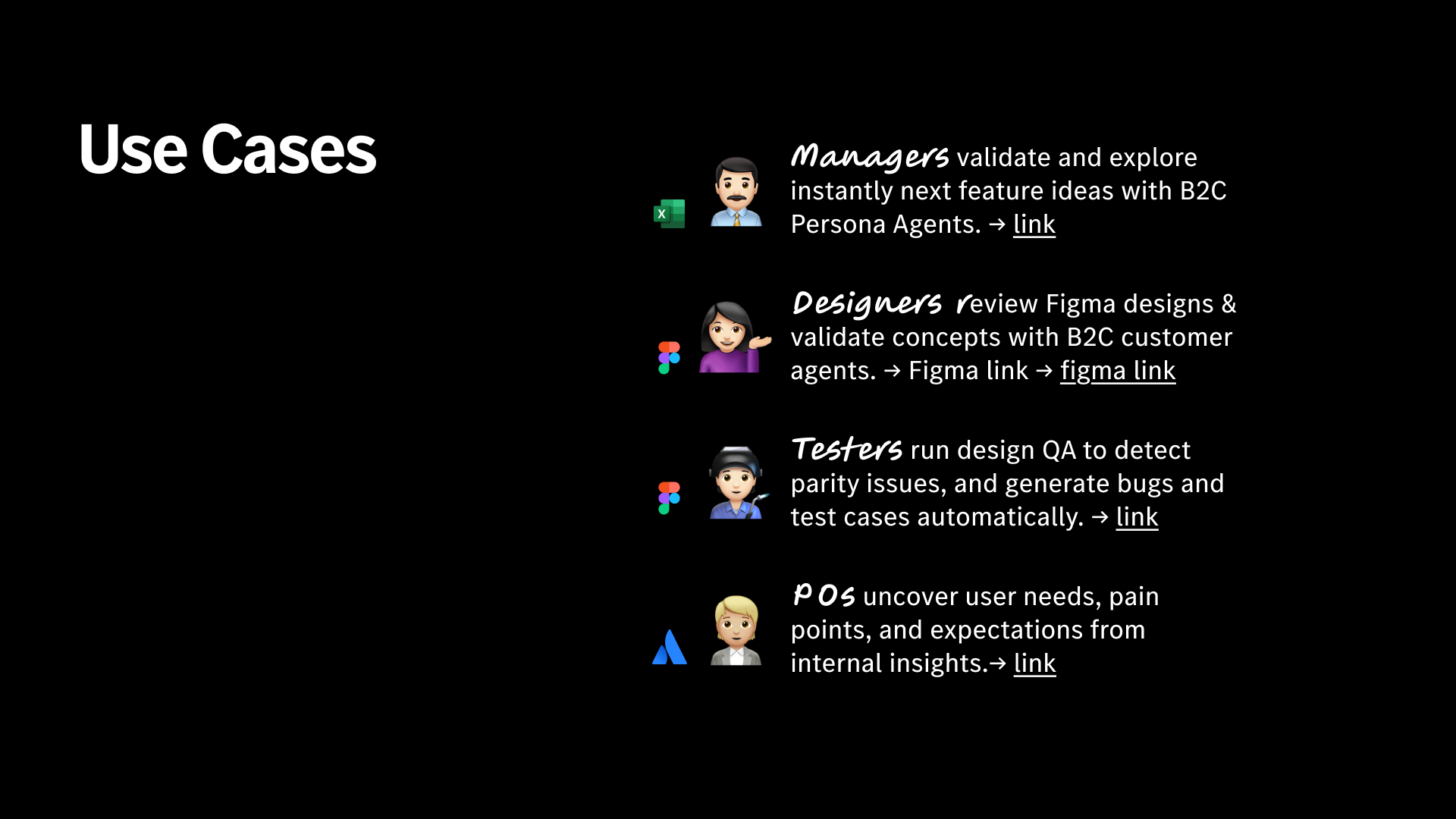
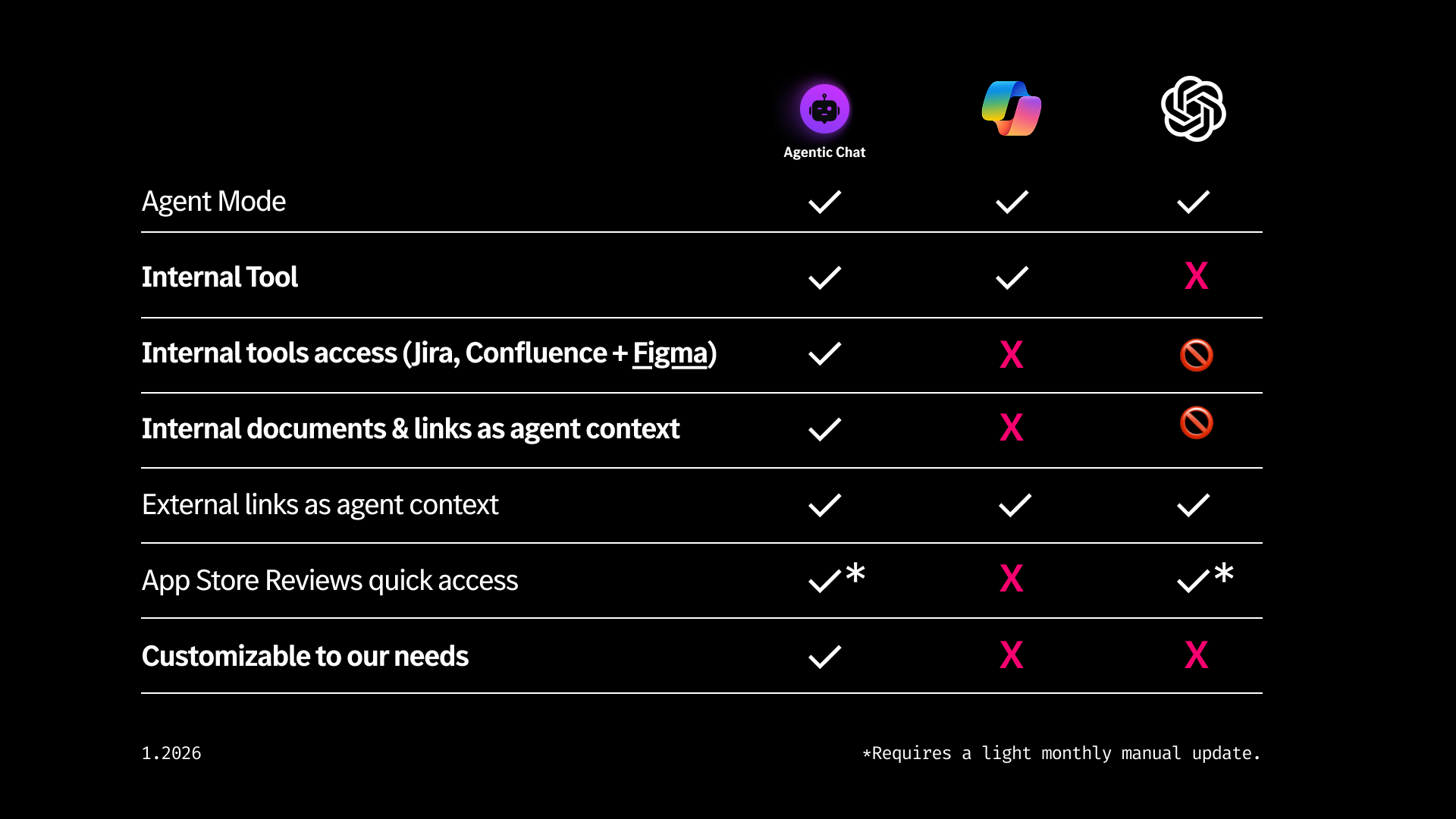
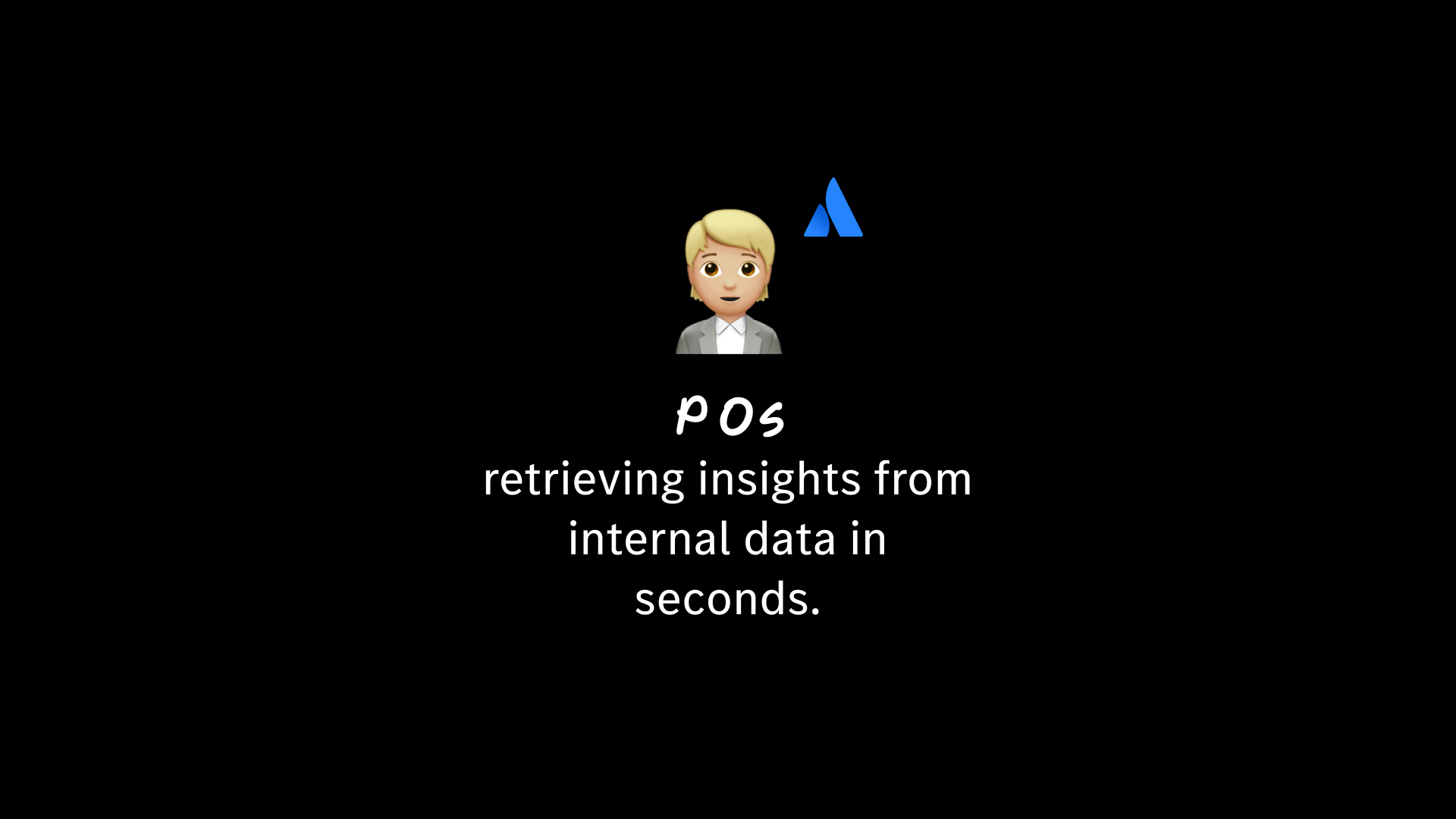
My idea. I co-created it with the Data Science team, defined the product direction, and drove it from concept to shipped. Agentic Chat lets teams talk to purpose-built AI agents — user personas, expert roles, knowledge sources — to get fast, grounded, decision-quality responses. Connected to Jira, Confluence, and Figma. Powered by internal documents and real data, not generic AI.
B2C Persona Agents & Figma Plugin
Product Extension | B2C Personas
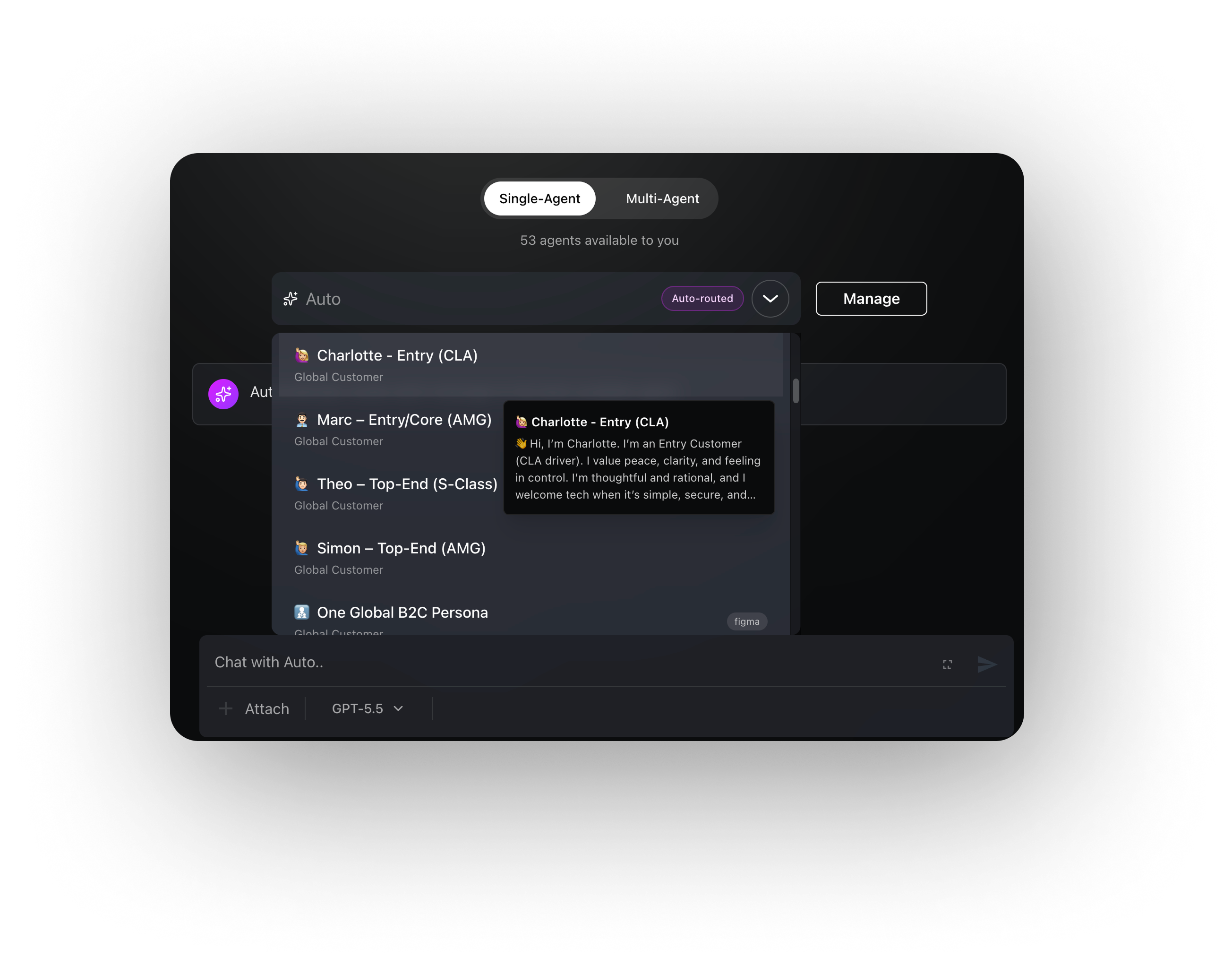
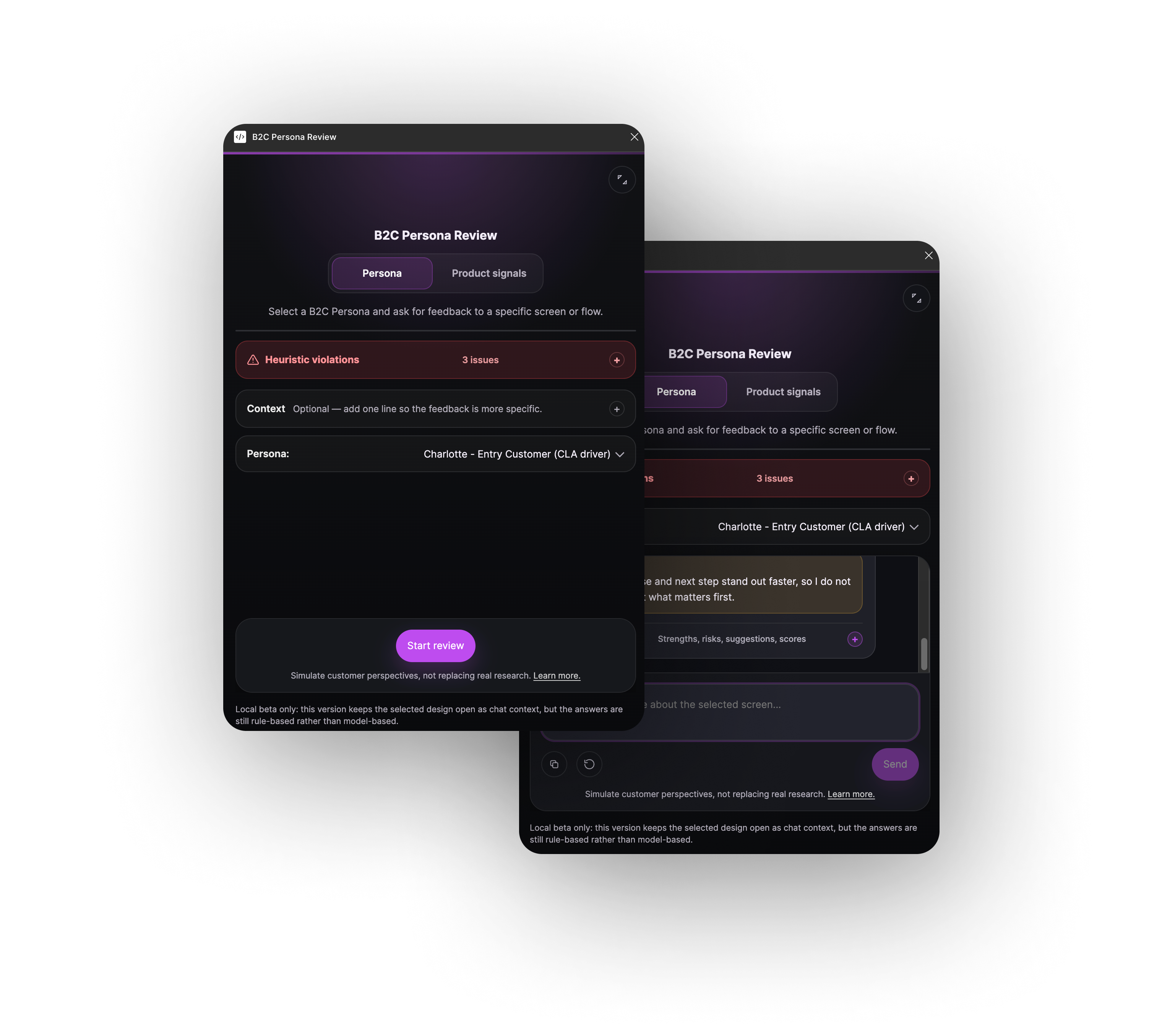
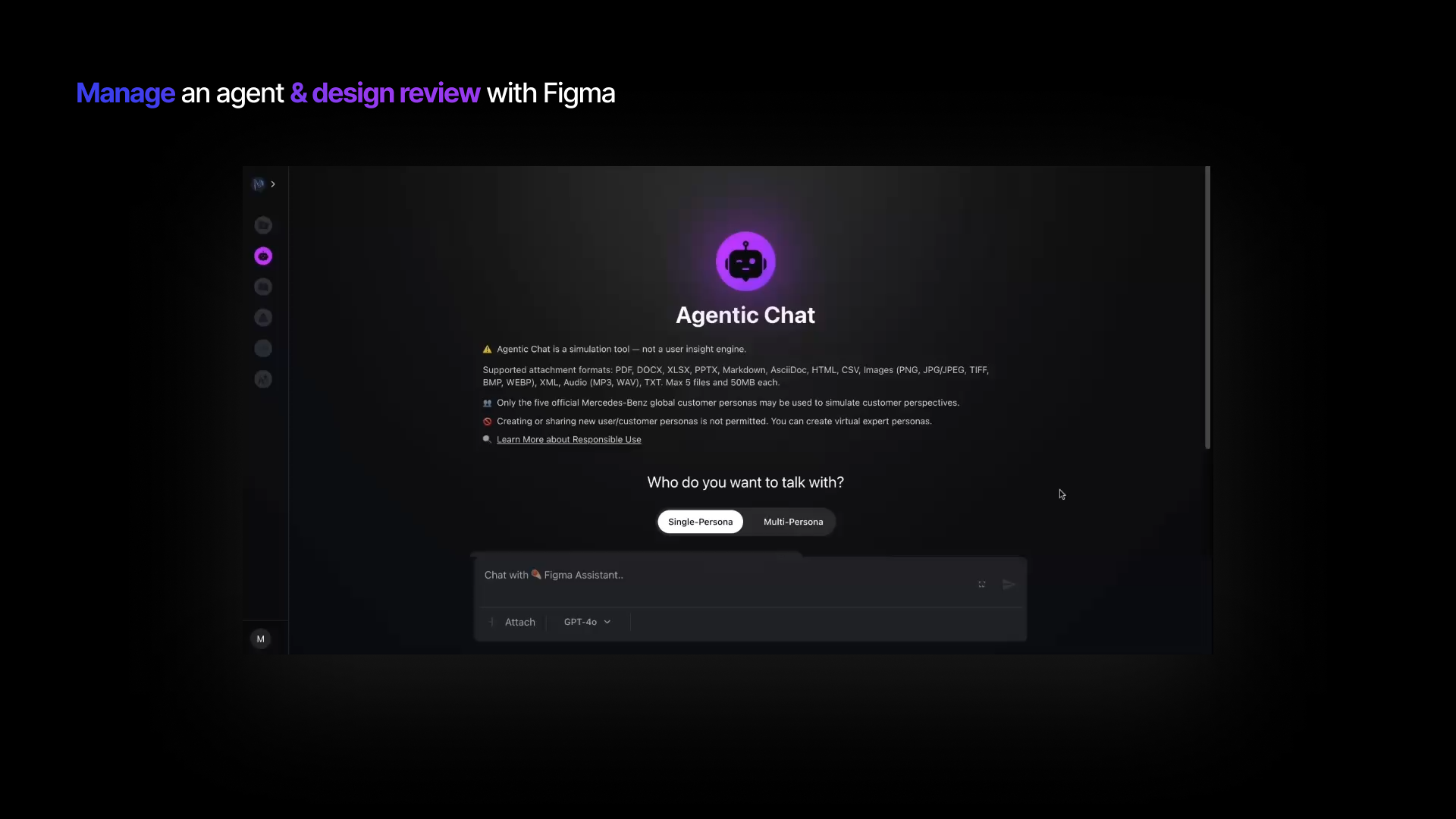
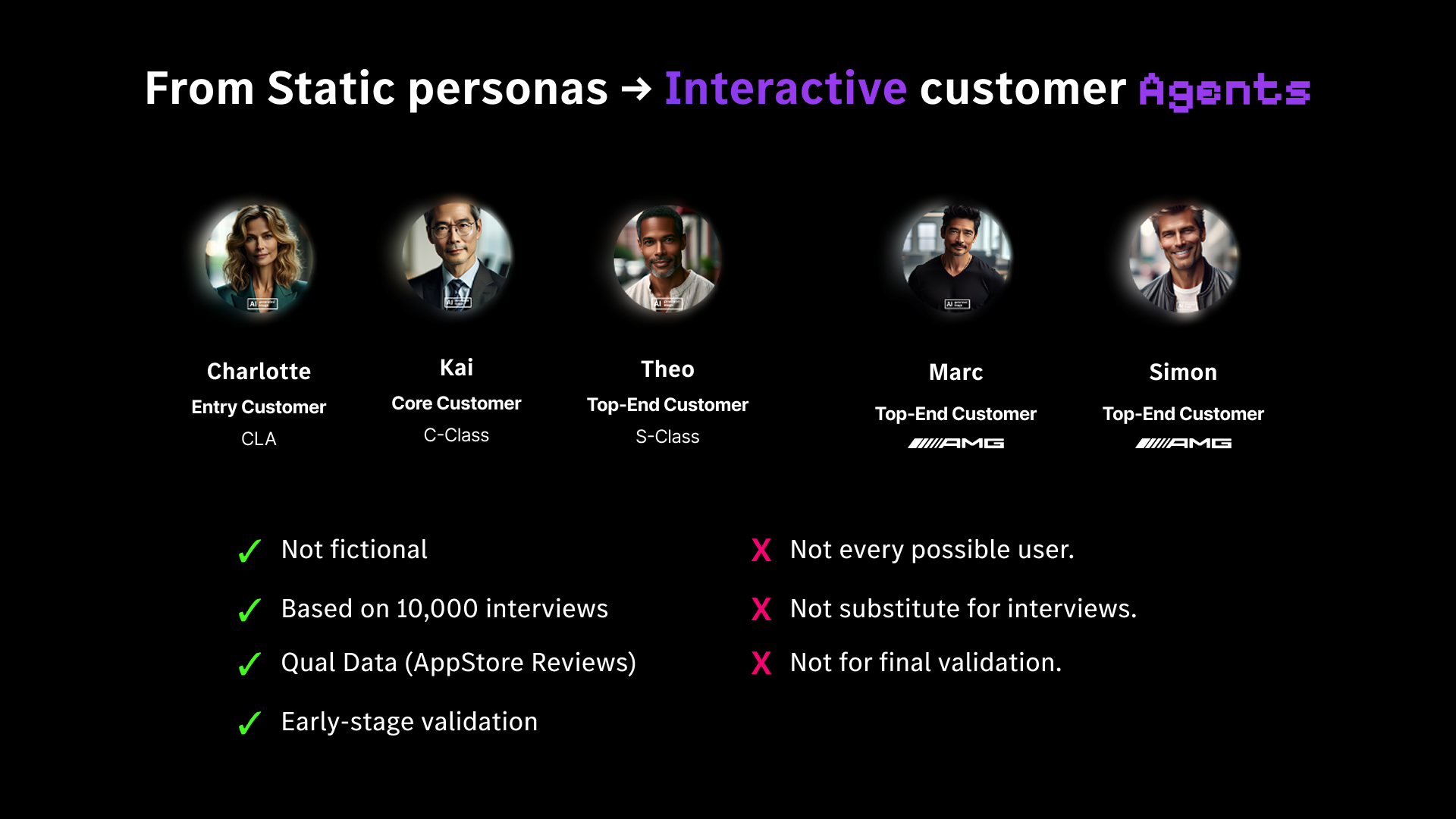
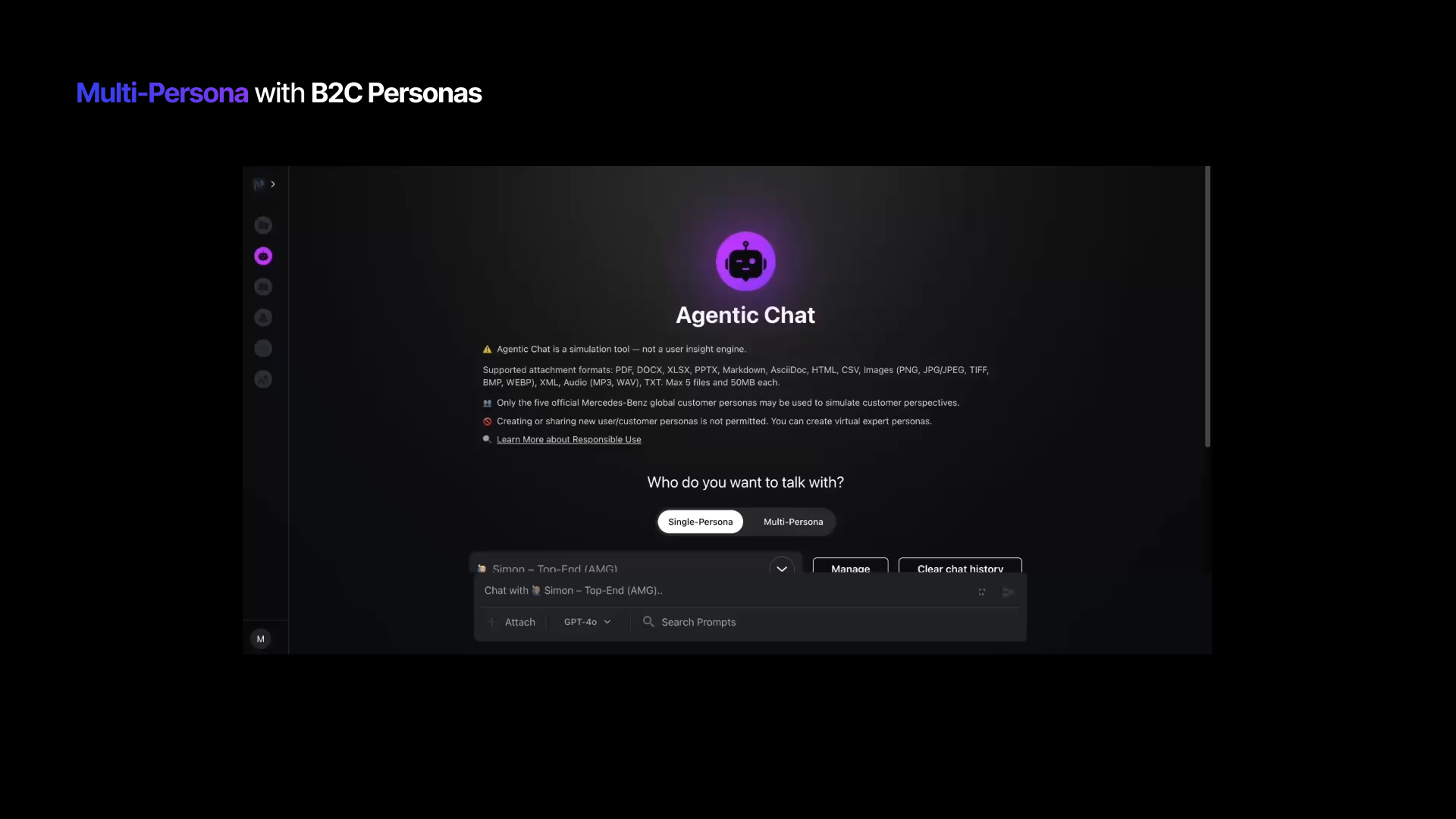
I defined and structured the B2C persona layer within Agentic Chat — 5 distinct customer agents grounded in 10,000 real interviews and App Store qual data, representing the full spectrum of Mercedes-Benz customers from entry to AMG. Then I built a Figma plugin to embed them directly into the design workflow — zero context switching, persona validation inside the tool where teams were already working.
House of AI - the full ecosystem
Agentic Chat was the first room I shipped. But the platform I designed grew into six distinct AI capabilities, all centralized, all secure, all connected to the tools teams already used.
From static documents to interactive customer intelligence
Static personas are ignored. They live in Confluence, get updated once a year if someone remembers, and mean something different to every team that reads them.
I structured the B2C persona layer as interactive agents — each grounded in 10,000 real customer interviews and App Store reviews, each representing a specific customer segment across the Mercedes-Benz vehicle range. Teams could now challenge their assumptions in real time, not at the end of a sprint.
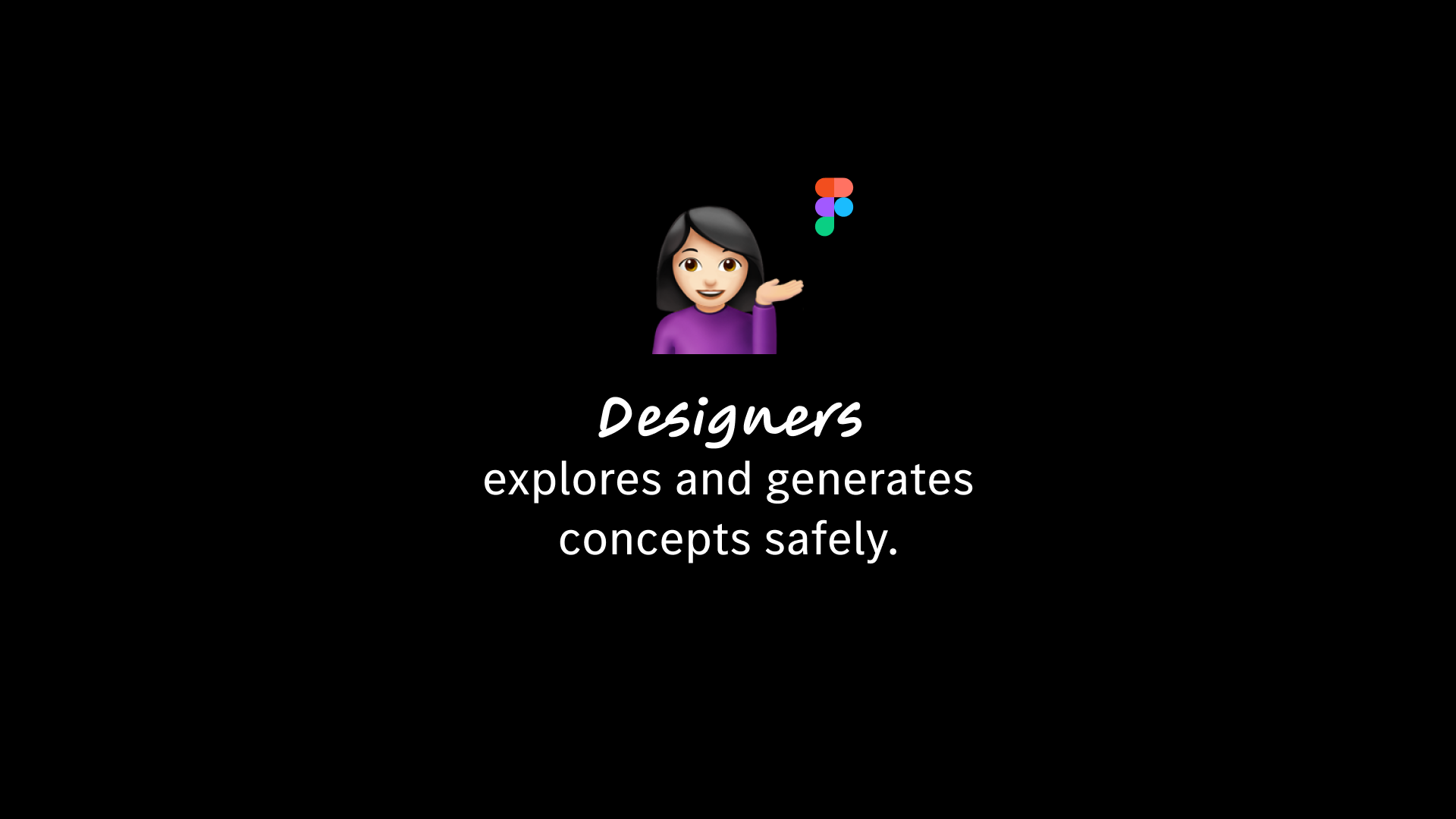
The Figma plugin removed the last barrier. Instead of switching tools to validate a design decision, teams could interrogate their assumptions against any persona directly inside Figma — in the moment they needed it, not after.
A shared language where there wasn't one before
Before House of AI, every team described the MB App user differently. Validation was optional. Decisions were made on instinct and internal consensus. After — teams had a shared, living reference they could actually talk to.
6+
AI tools in the platform
I conceived and designed
5
B2C persona agents
grounded in 10k interviews
2x
Company-wide presentations
at corporate AI Week
0
Context switches to validate
with Figma plugin
The Pitch
Most corporate AI presentations look the same — dense slides, bullet points, feature lists. Mine don't.
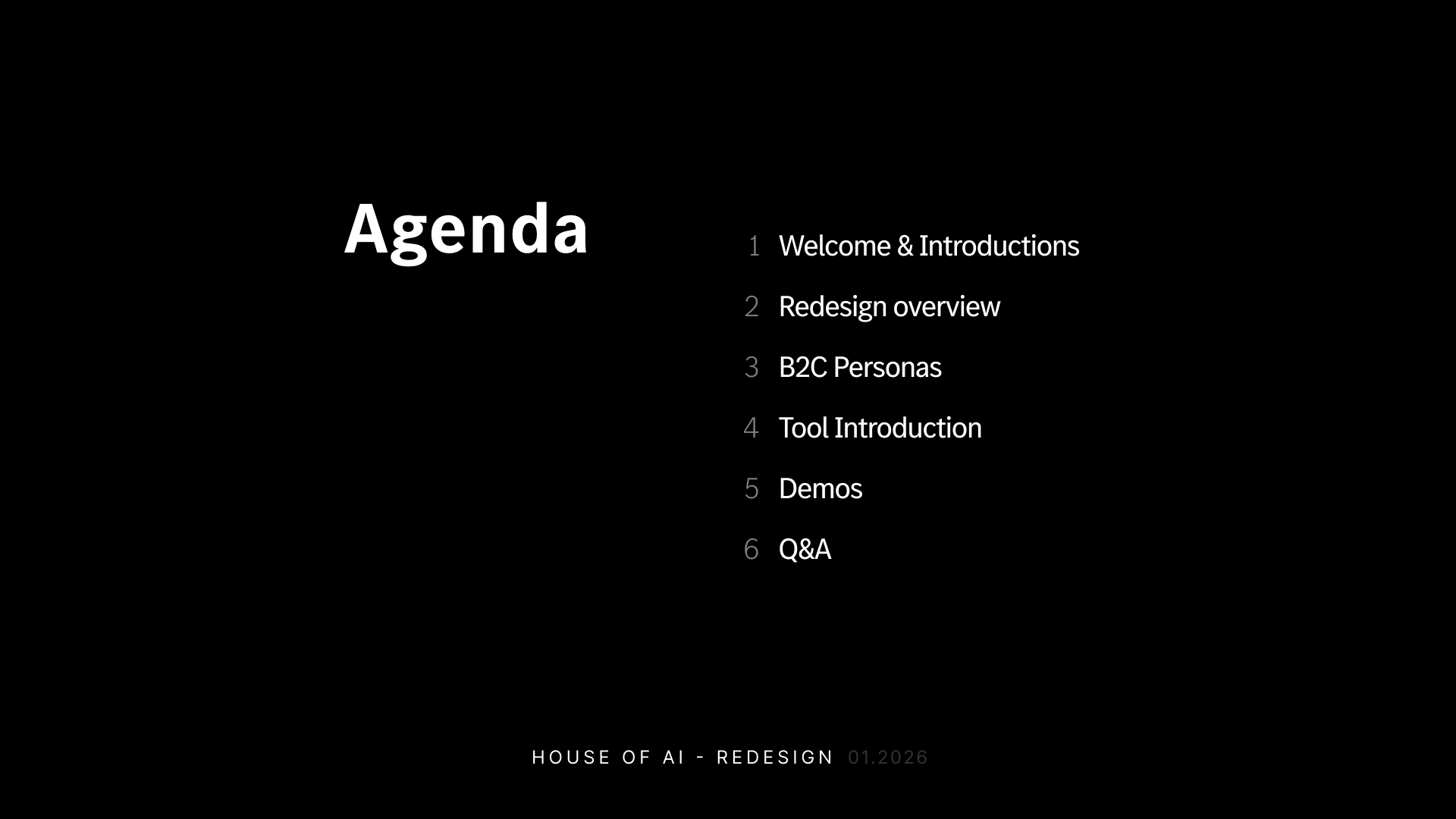
When I pitched Agentic Chat and House of AI at MBition's company-wide AI Week, and later presented the platform redesign to the entire organization, I brought something different: a narrative, a visual story, and a point of view.
I build pitches the way I build products — with a clear problem, a sharp idea, and enough craft to make people lean in.
I show the thinking, not just the conclusion.
I use design to make complex ideas feel obvious.
And I bring enough energy that even a simple concept lands with conviction.
The result: two ideas I originated went from internal concept to company-wide initiative — not because I had authority, but because I knew how to make people see what I saw.


The hardest part was never the AI.
On originating ideas
The concept was clear in my head long before anyone else saw the need. Turning personal conviction into organizational initiative requires framing the problem in business terms first — not the solution.
On platform thinking
Designing a platform is a different cognitive mode than designing a feature. You're designing possibility space, not a specific outcome. The metaphor (a "house") was a product decision as much as a design decision.
On adoption
People don't adopt tools because they're good. They adopt them because they remove pain from something they already do. The Figma plugin existed entirely because of this insight — distribution is product strategy.
On AI-Product framing
Calling it "chat with your user" created immediate buy-in. Calling it "AI-powered persona simulation" created skepticism. The language you choose for an AI product is part of the product itself.